Calm Mealtime Habits Can Change the Whole Evening
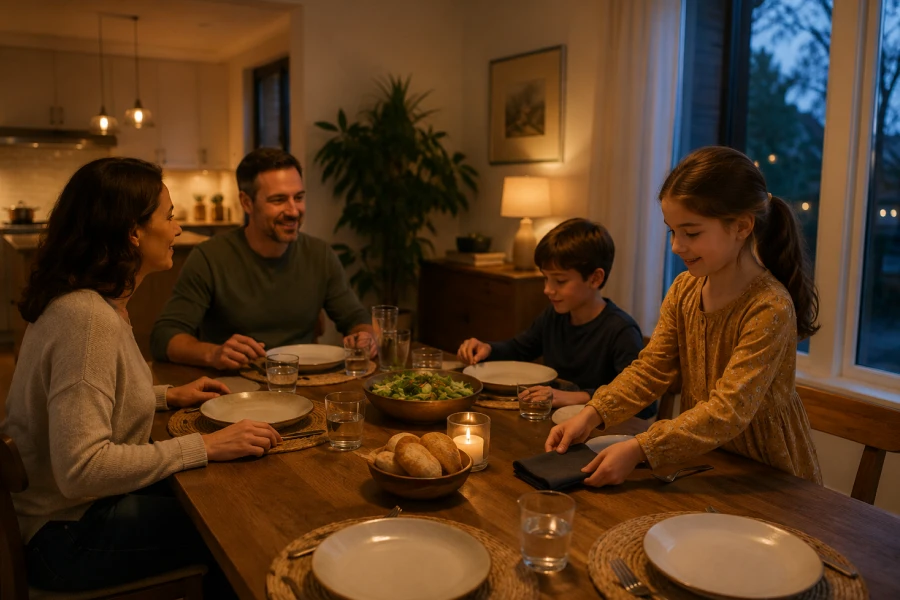
Calm Mealtime Habits matter because dinner often carries more emotion than anyone expects. Parents arrive at the table with hopes, worries, and unfinished tasks. Children arrive with big feelings, tired bodies, and strong food opinions. One small refusal can quickly become a family standoff. A better path begins before the first bite. It starts with routines that lower tension and make expectations clear. These habits do not require perfect parenting. They require repeatable actions that protect the mood of the meal. When the table feels safer, children often cooperate more naturally. Parents also feel less trapped by nightly battles.
How Calm Mealtime Habits Begin Before Dinner
Dinner often goes better when the transition is softer. Children may need a few minutes to shift from play, screens, homework, or fatigue. Parents can create a simple pre-meal cue. It might be washing hands, setting napkins, or choosing music. This tells the child what comes next. It also lowers surprise, which can lower resistance. A child food routine gives families a dependable rhythm before food even appears.
The pre-meal moment also helps parents reset. A rushed parent can accidentally bring urgency to the table. Taking one breath before serving food can change the tone. Speaking slowly helps too. Children often mirror emotional pace. If the adult energy feels frantic, refusal may increase. If the adult energy feels steady, the meal has a better chance. These tiny actions create a calmer doorway into dinner.
Calm Mealtime Habits Reduce Food Drama
Food drama grows when every reaction becomes important. A child refuses carrots. A parent reacts strongly. The child learns that carrots create attention. Neutral responses reduce that cycle. Parents can acknowledge preferences without negotiating endlessly. They can say the food is available and continue the meal. This does not ignore the child. It simply keeps the moment from becoming the center of dinner. Mealtime cooperation grows when the emotional stakes drop.
Neutral language also teaches children how to describe food. Instead of saying something is disgusting, they can learn words like crunchy, soft, warm, or strong. Parents can model this language casually. They do not need a lecture. They only need repeated examples. Over time, children gain better tools for communication. That can reduce rude comments and table tension. It also helps parents understand what the child is actually experiencing.
Set Clear Roles at the Table
Clear roles make meals less confusing. Parents decide what food is offered and when meals happen. Children decide how much they eat from what is available. This division reduces control battles. It also gives both sides dignity. Parents still lead. Children still listen to their bodies. When roles blur, meals can become negotiations. A child may demand alternatives. A parent may beg for bites. Clear roles help everyone return to structure.
Parents can explain these roles simply. They might say, “This is dinner, and you can choose what to eat from your plate.” The phrase stays calm. It avoids threats. It avoids bribes. It also avoids making the child responsible for the family mood. Consistency is the hardest part. Still, repeated boundaries become familiar. Familiar boundaries often feel safer for children. They also protect parents from endless decision fatigue.
Calm Mealtime Habits Support Food Confidence
Food confidence grows when children can explore without feeling rushed. They may first tolerate a food nearby. Then they may touch it. Later, they may taste it. Parents sometimes dismiss these steps because they want faster results. However, confidence often grows through tiny contact points. A food confidence for kids approach respects that process. It gives children room to build comfort gradually.
Parents can invite exploration without requiring performance. They can talk about color, smell, sound, or texture. They can let children serve themselves a tiny portion. They can include children in washing, stirring, or arranging food. These actions reduce mystery. They also make food feel less like something being imposed. The child becomes a participant. Participation often opens the door to curiosity. Curiosity opens the door to tasting when readiness appears.
Protect Conversation From Food Battles
Meals are not only about nutrients. They are also a daily chance for connection. When every sentence focuses on bites, that connection shrinks. Parents can protect conversation by asking simple, warm questions. They can talk about the day, a funny moment, or tomorrow’s plans. Food stays present, but it does not dominate. This helps children experience the table as a family place. It also gives parents emotional relief.
Connection does not mean ignoring behavior. Boundaries still matter. Children should speak respectfully and stay within family expectations. The difference is that parents do not let food refusal steal the entire meal. They redirect when needed. They return to conversation when possible. This helps the table feel less like a battlefield. It also reminds children that belonging does not depend on finishing everything.
Keeping Calm Mealtime Habits Consistent
Consistency works best when habits are small enough to repeat. A family might choose three core practices. They could use a transition cue, neutral food language, and predictable plate structure. Those habits are easier to maintain than a complicated system. Parents can add more later. A toddler food support framework can also help families adapt routines for younger children.
The goal is not flawless meals. Real families will still have spills, refusals, tiredness, and noise. The goal is recovery. Calm routines make it easier to return after a hard moment. They keep dinner from feeling ruined. They also show children that meals can be steady even when feelings are big. Over time, that steadiness becomes part of family culture. It can make evenings feel lighter for everyone.













Leave a comment